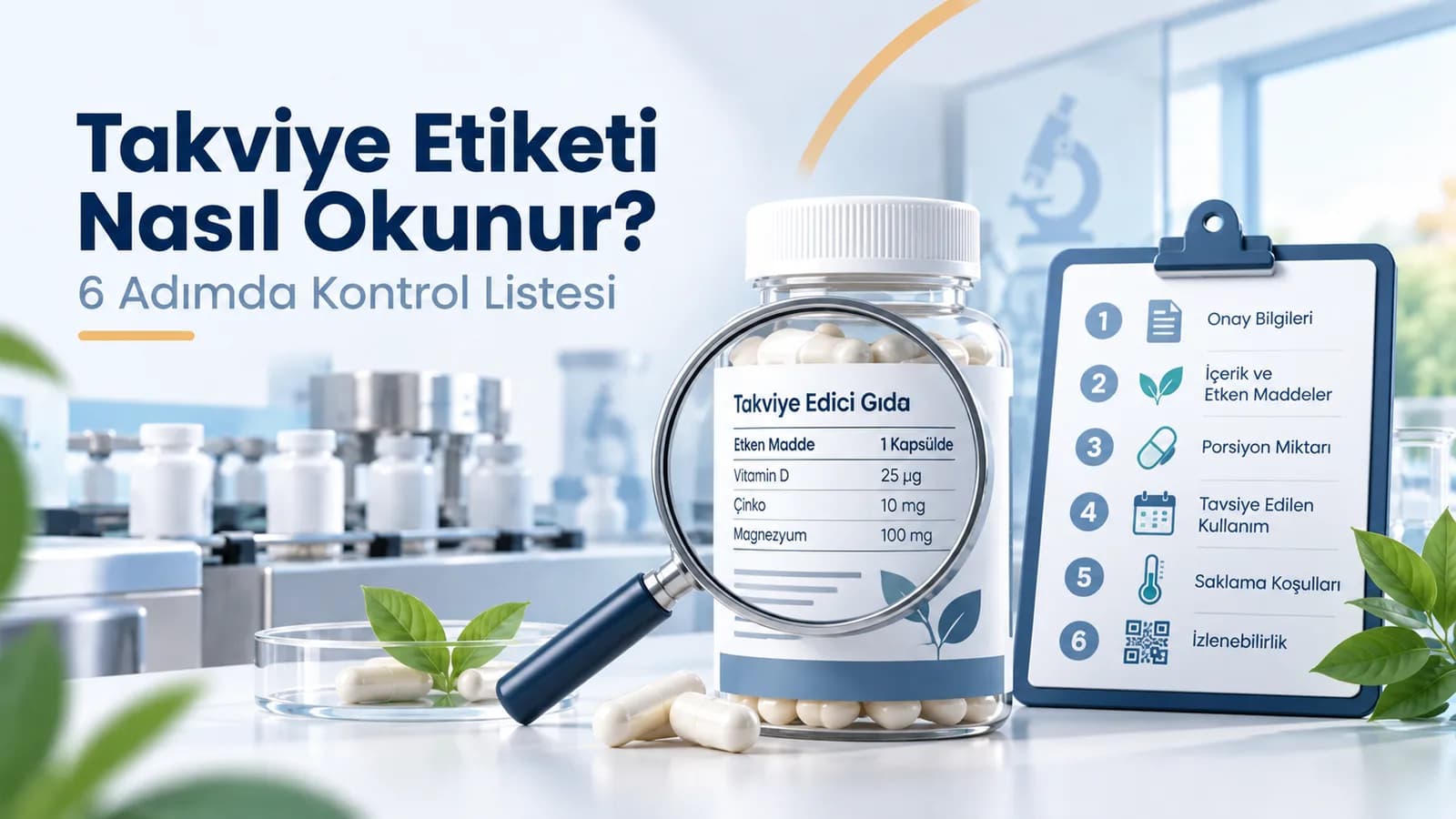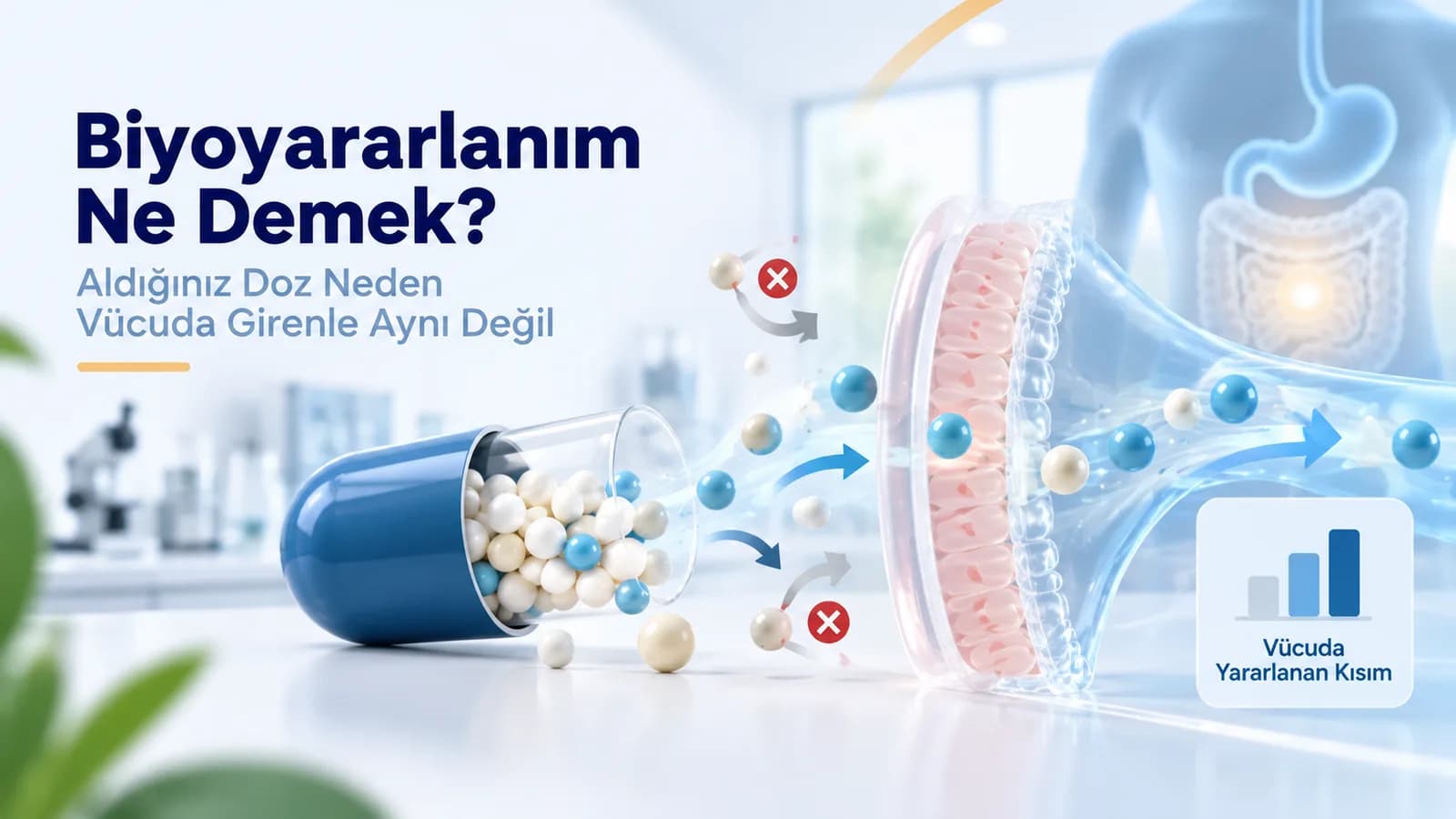
If a supplement label says "1000 mg vitamin C", it is a common misconception to assume that the whole 1000 mg ends up in the bloodstream.
Bioavailability describes how much of the amount taken actually enters circulation and becomes usable. It is expressed as a percentage and varies enormously from substance to substance and from form to form.
Why is there a loss?
There are several reasons. Stomach acid breaks down some molecules. Some substances struggle to cross the intestinal wall. Others are metabolised to a significant degree during the first pass through the liver.
The body also has a limited transport capacity for certain substances. For these, doubling the dose does not double the amount absorbed; beyond a certain threshold, the excess is excreted.
Is a "high dose" always better?
No. Once absorption capacity is saturated, most of the extra amount is excreted; this is the case for water-soluble vitamins.
What is more, high doses can cause digestive complaints in some people. That is why "how much of it can actually be used" is a more meaningful question than "how many milligrams".
Every substance has a safe upper intake level; the daily portion recommended on the label is set with these limits in mind.
When comparing products
When putting two products side by side, look at three things: the amount of active ingredient per portion, the form used (magnesium citrate or magnesium oxide, for example) and the number of daily portions.
Two products with the same milligram value can behave differently in the body if their forms differ. Working out the price per portion also gives a fairer comparison than looking at the price of the box.
Legal notice
Food supplements are not a substitute for a balanced diet. They are not intended to prevent or treat any disease. If you are pregnant, breastfeeding, taking medication or have a chronic condition, consult your physician before use. Do not exceed the recommended daily portion.